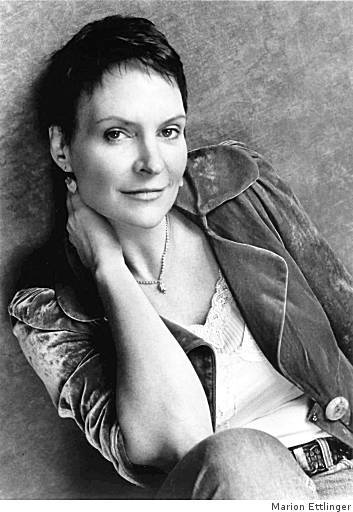
Thursday, August 29, 2013

Ann Beattie: "The Burning House" and "The Four-Night Fight"

Why do all the characters in "The Burning House" seem so callous?  This word occurred to me when I read the section in which Tucker gossips about his NYC scene, namecalling and making fun of the men in his social circles.  He mentions the opera singer, Maria Callas.  Ann Beattie's strength is in her selection of details that suggest so much more than they say.  The avocado pit.  The crock of mustard.  The goat mask.  The Wyeth painting called Christina's World.  The "beautiful old birdcage--solid brass."  By the time we start to put together what is happening in the story--that Amy suspects that her husband is in the middle of a marital infidelity, but that she is not innocent--she is involved in an affair, too--we reach a new section, a break from the evening scene, in which Amy explains how she met her lover.  And, at this point of the narrative, Beattie slings a zinger.  She invokes the old narrative form of the "fairy tale" with the retired English professor saying, "I believe all that wicked old fairy-tale crap: your heart will break, your house will burn."

Callous characters, I thought at that point of my reading, but at that point, the story hadn't broken my heart.  Not yet.  Into the once-magical bedroom ("twenty small glass prisms") of the disillusioned couple comes their son, a six years old, Mark.  He's regressed to sucking his thumb.  And Amy narrates how J.D. lost his own wife and son.  Then she tells a story about Tucker's obsessions and anxieties, and she reveals that Freddy is gay.  She says, "All those moments, and all they meant was that I was fooled into thinking I knew these people because I knew the small things, the personal things."

Is Beattie taunting us?  Tempting us to believe that we are going to "know" something about people and then saying that we have been fooled?  The ending of the story combines bleakness with surprise.  Tragic magic.  It tries to convince me that men are so different from women.  But does the story really mean it?  Maybe this is just Frank, getting back at his wife.


Monday, August 26, 2013

Donald Barthelme's "The School"

We were all out there this summer, you know, planting zucchini and sunflowers, when it happened, we fell in love.  Not with each other, I don't think.  I could be confused.  There was a helicopter flying overhead, it was loud, I remember, and you looked up with that face you have, the one where you wrinkle your nose.  There were eggplants, too, and Brandywine tomatoes.  It was a full house, you would say.  We didn't wear sunscreen, and that night, and many nights, our shoulders and noses ached from all the strong light.  Had any of us ever seen beans sprout from the ground?  How they seem so ugly at first, and then they unfold, little green bean cotyledons?  Did you see their amazing wings?

Wednesday, April 17, 2013

George Saunders: "CivilWarLand in Bad Decline," "Sea Oak," "Winky"


From The Pessimist
In encountering George Saunders, we enter a world starkly different, yet at the same time alarmingly similar, to the one we live in. We may not all work at a creepy place called CivilWarLand and speak to ghosts there, we may not work at a strip lunch restaurant while also dealing with a deteriorating (literally, physically falling apart, in this case) dead aunt, and I’m pretty sure none of us live with an alarmingly bizarre sister and hope we find the strength to kick her out, so that we can finally start our lives. In this sense, sure, Saunders introduces some absurdism into his work. However, this absurdism has its feet solidly set in reality. This is what sets Saunders apart, in terms of writing style. He brings the reader in by introducing us to very human situations. In the narrowest sense, “CivilWarLand in Bad Decline,” “Sea Oak,” and “Winky” all share a certain desperate tone. All of the characters are fucked up, to put it mildly. But, they are not fucked up to the point of being unrecognizable. In fact, they are all quite recognizable because of their very human desires. The narrator in “CivilWarLand in Bad Decline” just wants to make money for his family to survive on. Sure, we realize he is letting a lunatic run around killing people, but this doesn’t change the fact that he is just a man trying to make ends meet. Our narrator in “Sea Oak” is working at a strip joint, but he, too, is doing it out of desperation. He seems like a smart enough guy, but this the only work he can find. But, then, his aunt dies and comes back to haunt him. Is she a ghost? No, not in the sense that the McKinnons are. Rather, she is much more of a zombie, come back to instruct her family how to live. And do they listen? Sort of. Finally, “Winky” is a bit different from the other two pieces. In this story, our character is much more reasonable, I suppose one could say. Here, we are not presented with any dead people walking around, but we are still sure to see some bizarrness. First of all, this self-help seminar is extremely strange in the way it is set up. But, it is unlikely? No, it certainly is not. In the end, Neil is trying to survive, just like the narrators in the other pieces. However, his survival is not necessarily based on money. Rather, his based on living to the fullest extent that he can’t. His strange sister is limiting him; she is holding him back, so to speak. Naturally, in the end, all three of these stories do not end particularly well for the main protagonists.

In summing up George Saunders, we can call him an absurd writer, who has a strong understanding of humanity and how fucked up it really is. Moreover, people are not happy and rarely get what they want or even try to get what they want. But, that doesn’t have to be a problem, now, does it? We’re all just trying to get by, after all. 

Wednesday, April 10, 2013

Donald Barthelme: "A City of Churches," "The School," and "Robert Kennedy Saved from Drowning"

Donald Barthelme
Three general beliefs I've been led to by the work of Donald Barthelme are as follows:

1. Some (if not all) stories should unsettle readers.
2. There is meaning in absurdity.
3. It is necessary at every moment of our lives, or as often as we can bear it, to consider form.

Here are a few socio-historical musings to help you contextualize the work of this important writer.

Donald Barthelme, who was drafted into the Army to serve in Korea in 1953, became director of the Contemporary Arts Museum in Houston in 1961.  He published his first short story that same year.  He was thirty years old.

Only three years later, he published his first story collection, Welcome Back, Dr. Caligari (Little, Brown, 1964). It included many stories published in The New Yorker, including "Me and Miss Mandible."  Barthelme went on to publish over one hundred stories and four novels before he died at the age of forty-nine.  If alive today, he'd be eighty-two, the same age as Michail Gorbachev, Toni Morrison, Alice Munro, Dan Rather, and William Shatner.

On to the stories anthologized in 3x33.

"Robert Kennedy Saved from Drowning" appeared in print in 1968 in Barthelme's second collection, Unspeakable Practices, Unnatural Acts (New York: FSG), just two months before RFK's assassination.  RFK, the younger brother of JFK, was a Democratic senator, a civil rights activist, a candidate for President of the U.S., and forty-three years old when he died.  Could you imagine yourself writing such a piece about a young, contemporary politician?  Can you find yourself in a famous person?  Can you save a famous person, or yourself?

"A City of Churches" appeared first in The New Yorker in 1972 and then in the collection Sadness (New York: FSG, 1972).  Barthelme's family was devoutly Roman Catholic.  Go read about Saint Cecilia, as well as the origin/meaning of the name Cecelia.  When this story came out, I was one month old, born into a real estate agent's world  of "Be nice" and "There is nothing you can do," and Cecelia's thrilling response, "Wait and see."  It gives one a new way to imagine oneself, willing dreams in a town where no one will rent any cars.

"The School" was first published in Amateurs in 1976 (New York: FSG).  Barthelme's father was a professor of architecture at the University of Houston.  Although Barthelme studied journalism and philosophy at the University of Houston, he never earned a degree.  Over his life, he would teach for brief periods at Boston University, SUNY-Buffalo, and City College of New York, and he helped found the prestigious writing program at the University of Houston.  I like to think about who learns what in school, or in "The School."

Wednesday, April 3, 2013

Antonya Nelson "Control Group", "Naked Ladies", "Female Trouble"


Antonya Nelson takes surface problems and details in her stories and buries bigger problems beneath them that don’t take the central focus, but certainly add flavor to the characters and to the story. These deeper problems provide motivation or background information that explains or colors the characters’ actions and the way they interact with people.

http://www.wwcmfa.org/faculty-2/
In “Control Group”, TV’s surface problem is that he’s in love with his teacher, but the bigger problem that takes the back seat in the story is that his mother murdered his grandfather. This isn’t the main point of the story but it flavors and colors the events and provides a way for us to evaluate TV’s actions. There is also the side story involving the rats that runs parallel to TV’s being in love with his teacher. The rats aren’t the focus, and indeed they disappear halfway through the story, but they reflect back on what we think of TV.

With the exception of Laura and her father in “Naked Ladies”, the other characters seem to be preoccupied with what’s on the surface. Laura’s sister wants to be a model, Playboy magazines fascinate the boys, Mrs. House hides her figure behind peacock-colored clothing, and Mr. House festoons his entire house with artwork. The bigger problem is Laura’s mother and what’s going on with her. She takes off her wedding ring and gives it to Mikey as a toy, so she can’t think much of her marriage.

“Female Trouble” also deals with surface issues in that McBride sees all of these problems in the women he associates with. Daisy is out of control and immature, Martha is too serious and wants children, while Claire is depressive and suicidal. All of these women are older than McBride and, throughout the story, they prove themselves to be more mature and responsible than he is, though he doesn’t agree. Daisy is moving on from the past and becoming a more grown-up person, while Martha wants to settle down and tries to get McBride to move forward as well with his life. Claire serves as a lesson at the end that he has to take responsibility for his actions and he can’t just float through life, carefree, without there being consequences. 

Wednesday, March 27, 2013

Alice Munro "Walker Brothers Cowboy", "Friend of My Youth", "Save the Reaper"

Lorrie Moore's introduction of Alice Munro situates her along side Flannery O'Connor and Margaret Atwood. Our editor relates the regular comparison of her master of short fiction to Chekov. Pretty good company, huh?
Munro's stories, and here we've got a fantastic sampling of three to discuss, are captivating and full of wonder and curiosity. In no small part, this power is drawn out of Munro's narrators who are - and this is pretty cool - captivated and full of wonder and curiosity about the events of the story! Let's take "Friend of My Youth" as an example of this movement. Our main narrative regards two women, Ellie and Flora. We're mostly concerned with what happens to them. Now, those two women have a friend, and that friend has a daughter, and that's our narrator. Shouldn't we be scratching our heads at this? Wondering just what the hell is going on and what's with all this narrative distance and conceptualization of Ellie and Flora when Munro could just give them to us?

Well, here's part of Munro's magic. Her narrators are writers. Maybe we don't see them with a book and a cup of coffee and ink-stained jeans and a string of hapless romances. But they do the work of writers; they engage in theory of mind, projecting thought and rationale onto others, they search for cause and attempt explanation, they ask themselves questions and constantly speculate. Munro's curiosity permeates her pages, giving depth to her characters and bringing them to life so that we as readers do not say, "Hey, this story seems to be from a peculiar perspective." Instead we say, "Hey! That's a good question. I was just going to ask that."