Sunday, April 29, 2018

The 10 Best Sci-Fi Stories You Can Read Online for Free


Sigh Fie.

Nora K. Jemison makes me scream.
Sofia Saematar makes me sorry.
Amber Sparks makes me shiver.
Kristine Ong Muslim makes me sort of sick.
Brian Evenson makes me swallow, hard.
Lincoln Michel makes me stare.
Catherynne M. Valenti makes me stretch.
Jeffrey Ford makes me smile.
NNedi Okorafor makes me swear.
Kelly Link makes me sink.

What special effects do these stories have on you? Are they “literary”? Why or why not?


Tuesday, April 24, 2018

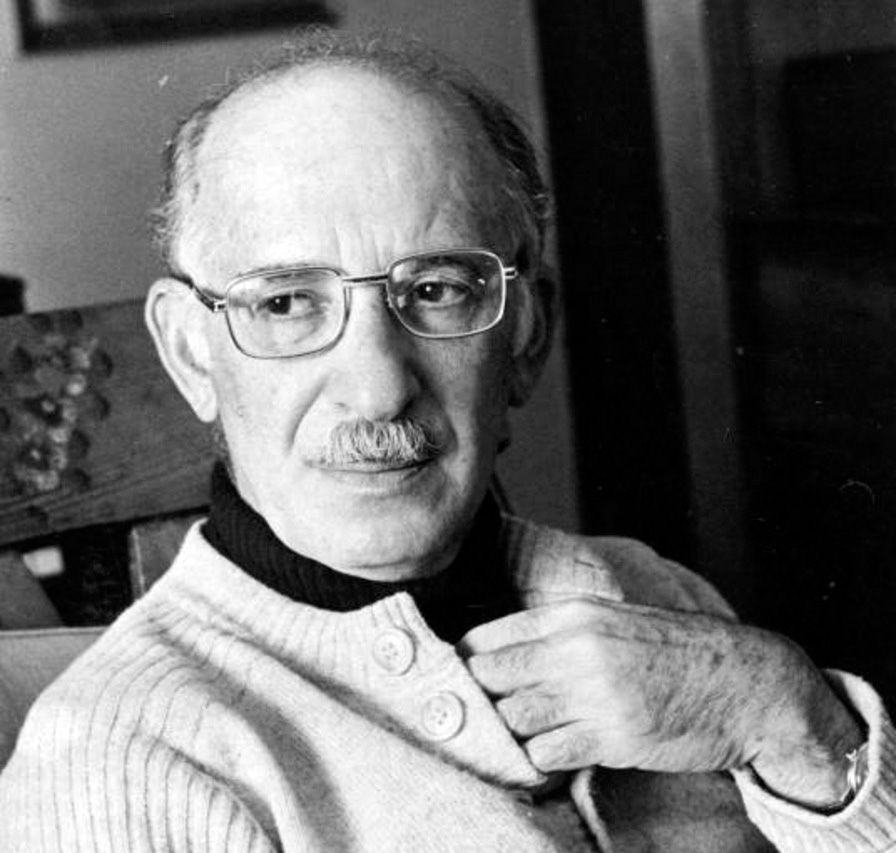
Bernard Malamud

Let’s talk about the literary canon: Bernard Malamud is one of a pantheon of New York writers of Ashkenazi origin whose work contributes to a Yiddish subculture recognized worldwide. This tradition often includes elements of fabulism. 

The Parisian Jewish French author whose work I translate, Cyrille Fleischman, also includes similar elements. In one short story, a literary author becomes the corned beef sandwich he has been selling. In another piece, a man becomes his son’s pet dog. Yet, few readers in France know Fleischman’s name. Likewise, Paris’s substantial Yiddish population does not have the same worldwide renown, in part because of its decimation during the Holocaust. In part because of a lack of recognition by major publishing houses, for related reasons of social power dynamics that we might discuss in class.

Whose work becomes part of an established canon? 


In a fairly unrelated segue, I’d like you focus on yourself in these blog comments. What, if anything, in Malamud’s writing “speaks your language”? What elements, fabulist or otherwise, will you borrow? Set yourself some goals. Share them here.

Monday, April 23, 2018

Noy Holland (Group project post)

There is little information to be found about Noy Holland on the internet, But there is no doubt she's been a successful Author. Her latest work is I Was Trying to Describe What It Feels Like: New and Selected Stories, out now from Counterpoint Press. Noy's debut novel, Bird, came out in 2015 to much critical acclaim. Other collections of short fiction and novellas include Swim for the Little One First (FC2), What Begins with Bird (FC2), and The Spectacle of the Body (Knopf).  She has published work in The Kenyon Review, Antioch, Conjunctions, The Quarterly, Glimmer Train, Western Humanities Review, The Believer, NOON, and New York Tyrant, among others.  She was a recipient of a Massachusetts Cultural Council award for artistic merit and a National Endowment for the Arts Fellowship.  She has taught for many years in the MFA Program for Poets and Writers at the University of Massachusetts, as well as at Phillips Andover and the University of Florida.  She serves on the board of directors at Fiction Collective Two.

Tally is an incredibly short piece, less than two full pages. Yet there is a great deal of story told in those eight paragraphs. This leads to our first question: how short can a short story be, before it becomes flash or minute fiction? There is a lot of plot in a short space, so perhaps it is the contents of the story, or how much time is spanned that determines what kind of fiction it is?

In the New York Times review of her newest collection, I Was Trying to Describe What it Feels Like, Scott Bradfield says "For two decades, Noy Holland has been writing about the deep connections that develop between people and the natural landscapes they inhabit." Do you see such a connection in Tally? How does Noy Holland use the natural landscapes in the story to aid and shape the

Tuesday, April 17, 2018

Andrea Barrett

This is a placeholder for all you early birds with no feet.

Sunday, April 15, 2018

Melissa Goodrich

THESE stories zoom toward our planet from the Oort cloud that is Melissa Goodrich's brain. The tales are prismatic and sweetly perturbing, and the language is lemniscate. Like your little brother and sister in a house of mirrors, Goodrich plays tag with your tongue. Tighten your Kuiper belt, sweethearts. This is a fabulous ride.

Thus I blurbed Melissa's first book.

Look for risks. Look for sadness and death. Look for fun. 

Sunday, April 8, 2018

Danielle Evans


Danielle Evans is a modern American author. She studied at Columbia University and the University of Iowa. She is currently teaching at the University of Wisconsin-Madison and will be teaching at John-Hopkins University in the fall. She has won several awards, including the “5 Under 35” fiction writer’s award in 2011. Her first anthology of short stories has been awarded the PEN/Robert Bingham in the same year. Danielle Evans’s writing was also published in The Paris Review and  the 2008 and 2010 Best American Short Stories collections in addition to the 2017 one, where “Richard of York Gave Battle In Vain” was anthologized. This is an impressive amount of accolades for such a comparatively young author.
“Richard of York Gave Battle In Vain,” was also published in the American Short Fiction literary journal, in Fall 2016, which was a retrospective of the best pieces published in the past 25 years. New Pages review of the journal mentions Evans’s story by name, and devotes a paragraph to it, an honor for such a brief review of a whole journal chock full of excellent writing.
Jenny Mark, the reviewer mentioned above said that, “Another story in this volume that had me completely focused on every word was “Richard of York Gave Battle in Vain” by Danielle Evans. The name of the story was confusing to me—what could it be about? Even having read the story, I still am not sure how the title connects to the events within except that it harkens somewhat to the main character, Rena.”
In your comment please give us your opinion on how the piece’s title connects to the text of the story? Does the title fit? What influence does the historical reference have on the piece?

Monday, April 2, 2018

Margaret Atwood

I first read Margaret Atwood's stories collected in BLUEBEARD'S EGG AND OTHER STORIES when I was in high school! This astonishes me now to consider, as I didn't come from a particularly literary family or community. How did I come to possess this soft-cover book, which still sits on my book shelf? I have no idea, but I'll never forget its impact, or how Margaret Atwood came to be one of the few writers I consider "my favorites."

THE HANDMAID'S TALE is the novel that catapulted her to international fame (she's from Canada), and I love this book, but you have to read these: THE MADDADAM TRILOGY (pure literary sci-fi), CAT'S EYE (coming-of-age girls and their evil ways), THE BLIND ASSASSIN (weaving three different genres of writing), THE ROBBER BRIDE (fantastic psychological ghost story). I've read others of her 17 novels, but these are my favorites. And she has published books of poetry. Not to mention 10 books of short fiction. Oh. My.

I saw her speak once. Already in her late seventies (this was several years ago, at AWP), she was dynamite. Fiercely political, intellectual, straightforward, and terribly witty: and these traits definitely figure in the stories you're reading for the online class.

"Happy Endings" is a tour-de-force of metafiction and modern self-consciousness, a statement on storytelling and ontology. It was included in a collection called MURDER IN THE DARK (1983).

But for your blog comment, please focus on "True Trash." Along with "Wilderness Tips," it appeared in Atwood's 1991 collection called WILDERNESS TIPS. This story contemplates the stereotypical romance novel and plays with its tropes. How does Atwood fool with the reader's expectation (class bias, anyone) and does her story succeed?

If you wish to comment on "Wilderness Tips," perhaps you'll consider how this story plays with one character's life history in contrast to another's (again, note the class and national bias).

Tuesday, March 20, 2018

Jess Walter (Plot Twist: Another White Guy)


Jess Walter is an American author of six novels, one book of short stories and one nonfiction book. He received the Edgar Allan Poe Award for his novel Citizen Vince in 2005, and his short story compilation We Live in Water (2013) won the Pacific Northwest Booksellers Award. His work has been featured in Best American Short Stories, Best American Nonrequired Reading, Harper's, Esquire, McSweeney's, and Byliner. Walter lives in Washington with his wife and three daughters.

Being a straight white male, Walter is a man who fits perfectly within the classic literary canon. He has a habit of writing “loser men” who are down on their luck and turn to questionable means to make things write. In The Financial Life of Poets, a down-on-his-luck poet who turns to illegal activity to provide for his family. So, it’s a bit of a surprise that this short story would take place from the point of view of a successful woman who is entertaining a movie star who is questioning himself.

The only part of the story that is consistent with his larger body of works is one thing: his voice. Famous Actor’s narrator and actor have very strong and clear personalities through the pages. Walter takes his typical miserable guy setup and tells the story from the perspective of a woman. It is through these voices that we learn more about these characters and begin to care about them and their histories.

What do you think the author is trying to say with the voice of Katherine? Do you think the story works better in her POV than the Famous Actor or not? And why?

Sunday, March 18, 2018

Eudora Welty

Original post (Sunday, 3/18): My post on Welty's stories is forthcoming...feel free to post your comments before I get myself in gear ...

Second post (Monday, 3/19): Referring to "A Worn Path," Lee Smith calls Eudora Welty's language "plain yet poetic." Come up with your own analysis of Welty's language (in any of the three stories you've read). Especially: look at how her language choices affect and direct the reader.

Tuesday, March 6, 2018

Flannery O'Connor (Nic)

Flannery O'Connor is one of the most respected short-story writers of the 20th century.  Her introduction in 3x33 crowns (or halos) her "the patron saint of the contemporary American short story" despite her last published work being written just before her premature death in 1964.  O'Connor was born at the tail end of the women's suffrage moment, joined the Iowa Workshop the year World War II ended, and spent her post-MFA life in her hometown of Savanna, Georgia throughout the Civil Rights movement. 

She fictionalized some of the most country-shaping movements of our modern history, bringing voices to the unseen and the uncomfortable.  She was unflinching in her work, as well as her commentary on such.  On the content of her work, she was quoted, "The truth does not change according to our ability to stomach it." What a BAMF. (Sorry for the language, Catherine) While dealing with incredibly heavy subjects like sexuality, sexism, racism, religion and more, O'Connor's work is never heavy handed.  She doesn't villainize or victimize a single character, refusing to let her readers take the easy way out and choose a good versus bad character to love or hate. Everyone is redeemable, everyone is questionable, everyone is complex.  This, I think, is what makes her short stories so perfectly reflect human nature.

What characters in "A Good Man Is Hard to Find", "Everything That Rises Must Converge" and "Good Country People" did you feel the most conflicted over? Who did you want to dislike, but sympathized with in the end, or vice versa? Most importantly, how did O'Connor evolve these characters as you read? Find specific moments/lines that support your idea of each character, whether it caused, confirmed, or conflicted with your initial opinion. 

(You don't need to respond to this specifically in the blog, but be aware of how she balances drama with subtlety.  These stories' plots have "big" moments, murder or theft combined with an all-consuming epiphany or divine intervention [O'Connor was raised Roman Catholic and drew heavily from Gothic literature]. However, those plot moments never actually overtake the emotional resonance of the piece. The what never overshadows the who. We're going to talk in class on how the characters exist through the plot versus the story (like the 2nd subject in nonfiction), so be mindful of that as you read!)

Sunday, February 25, 2018

T.C. Boyle (on behalf of presenting group)

T.C. “Straight White Baby Boomer” Boyle was born in Peekskill, New York. At the State University of New York, he began as a music student but switched to English and history. He earned his M.F.A. from the University of Iowa Writers’ Workshop, and while there, he studied with John Cheever and John Irving. The one and only story he submitted as a portfolio for entrance to this workshop was “The OD and Hepatitis Railroad or Bust.” 
While there, he studied many canonical literary works, but his favorites included “dark comedy” writers John Barth and Robert Coover. His first novel, Water Music, was published in 1982. His first short story collection was called the Descent of Man which dealt with just that, issues of humanity told in absurdist/fabulist/magical realist fashion. In 1988, his novel, World’s End, won the PEN/ Faulner Award in Fiction. 
As a teacher, he encourages his students to not “write what they know,” instead they should “write what they don’t know and discover something.” When writing he has been said to listen to gloom, rain, and suicidal cello conciertos in order to help him get in the modd to write the kind of fiction he writes. 
In his home, he found that it was built by Frank Lloyd Wright and decided to write a novel called The Women which is about Wright’s many mistresses as told through a Japanese “intern” that was used as a sort of slave labour. Lorrie Moore, author of “How to Become a Writer,” when talking about T.C. Boyle’s writing, describes it as a failure of satire, that it is “cut off from the oxygen of morality.” His most recent novel to be published is an eco-humanist work called The Terranauts.
In the last paragraph of the story, T.C. Boyle writes this:
“The girl—the genius—looks confused for a moment. ‘But, but,’ she stammers, ‘how can that be? You don’t mean you—?’
But before Allison can answer, a crowparrot sweeps out of the nearest tree, winging low to screech ‘Fuck you!’ in our faces, and the smallest miracle occurs. Tiger, as casual in his own skin as anything there is or ever was, erupts from the ground in a rocketing whirl of fur to catch the thing in his jaws. As quick as that, it’s over, and the feathers, the prettiest feathers you’ll ever see, lift and dance and float away on the breeze.”
How does T.C. Boyle view the future for humans? Do you agree or disagree?
 
What two animals would you have the CRISPR combine and why?

Sunday, February 18, 2018

Kevin Canty (post by Ryan Beckwith)

Kevin Canty was born in 1953 in Lakeport, California. He grew up in a family of artists, and his brothers Brendan and James both became musicians. In 1990 he received his master’s degree in English from the University of Florida and in 1993, he received his M.F.A. in Creative Writing from the University of Arizona.


Known for his concrete style of realistic fiction, his stories are inspired by tidbits from his everyday life, and he is said to be influenced by writers Raymond Carver and Harry Crews. He also draws inspiration from the poet Charles Bukowski. In a survey of his six novels and three short story collections, we found that Canty does not typically focus on religion as a subject. In our reading of the story “God’s Work” in Best American Short Stories 2017, we find a story by an established writer whose subject material in this story, on its surface, departs somewhat from his other work.


In class, we have discussed the concept of a literary canon, and how canon(s) may or may not shape contemporary writing. Does finding “God’s Work” in the Best American Short Stories 2017 tell us anything about the current state of the canon?

Tuesday, February 13, 2018

Donald Barthelme

Barthelme, drawing by David Levine
I just ran across an interesting book review of a 2009 biography of Donald Barthelme. The review is by Lorrie Moore. I appreciate her analysis of Barthelme's writing and so paste it here for you to inhabit:

"In a way, Barthelme’s work was all inner life, partially concealed, partially displayed. His stories are a registration of a certain kind of churning mind, cerebral fragments stitched together in the bricolage fashion of beatnik poetry. The muzzled cool, the giddy play, the tossed salad of high and low: everything from cartoon characters to opera gets referenced in a graffitti-like chain of sentences. Conventional narrative ideas of motivation and characterization generally are dispensed with. Language is seen as having its own random and self-generating vital life, a subject he takes on explicitly in the story “Sentence,” which is one long never-ending sentence, full of self-interruptions and searching detours and not quite dead ends (like human DNA itself, with its inert, junk viruses), concluding with the words “a structure to be treasured for its weakness as opposed to the strength of stones.” 

If interested, you can read "Sentence," an amazing, crazy text, here.

Meanwhile, to inspire comments, I'm going to lean into something Johnathan Letham says in his introduction to Barthelme in 3x33, Lethem's idea of drifting into "silliness, gloom, parody, restlessness, self-mocking." Without referring to categories mentioned in the introduction or elsewhere (postmodern, minimalist, metafiction, or, as Moore says in her book review, fabulist), please comment on the stories you've read. What do you think about drifting and these results?

Tuesday, February 6, 2018

George Saunders (Nic Schmidt)

A geophysical engineer, a Beverly Hills doorman, a roofer and a slaughterhouse laborer walk into a bar. George Saunders orders ...  probably a scotch, but I hope something with pineapple and a pink paper umbrella.  Saunders's past sounds more like a hodgepodge joke set-up than the more traditional steps to becoming a writer we're familiar with.

Incredibly, his life and writing parallel each other: His short stories take unconventional, even ridiculous, routes, they follow unbelievable characters living in hilariously absurd worlds. Yet, we still wholeheartedly believe in Saunders because of, as Aimee Bender called it, the "trust, that inside knowledge" of the worlds he builds for us. We don't know how we're going to get there, but we trust Saunders to make it happen.

Saunders's writing makes us think "impossible" but feel honest, genuine emotion upon arrival - and the arrivals are never small.  His works usually center around a socio-political commentary that, if in traditional realism, would likely read as either irritatingly peppy or infuriatingly depressing.  Because his commentaries are made by a mute Civil War ghost, a hand in a bowl of soup, or a zombie auntie, however, by the time Saunders's true subject peeks out from behind the curtain, we finish out the piece wondering how we didn't see its toes poking out earlier.

Saunders calls his experimental strangeness necessary to producing the emotions and statements that his writing is known for. No matter how fantastic, hilarious, or just unbelievable his work gets, he attributes every moment as essential, the weirdness is "not a fancy side-project", but pivotal every step of the way.

What moments in "CivilWarLand in Bad Decline" and "Sea Oak" seem like pivotal weirdness to you? (You can comment on "Winky" too, but focus on the first 2.) How did Saunders make wide-reaching socio-political commentary in the same sentence he made you laugh? Where did Saunders's signature eccentricity bring you moments of current, emotional commentary on our own world?


Friday, February 2, 2018

James Baldwin

http://www.warscapes.com/blog/ferguson-haunted-james-baldwin
In the end of "Sonny's Blues," arguably the most beautiful short story in the English language, Baldwin turns our attention to a "Scotch and milk." First the narrator's brother drinks from it and looks at his brother. Then he puts the drink back on the piano. Stay with the narrator's gaze and his wonder and his fear and his love, all the emotions you can conjure, and you'll be transported outside yourself into the music of this story. In this story and the other two you're reading, notice how Baldwin takes elements and explode them so as to take on surreal, transcendent dimensions.

Tuesday, January 30, 2018

Lorrie Moore

Canonical Babbling in Peed Onk: Now, Where Is the Money?
For this blog comment, please focus on "People Like That Are the Only People Here."

Can you see how this fiction is not only telling a compelling story (who could ignore a baby with cancer?) but also telling a story about telling a story?

If you wish, you could compare this story to one of the others ("You're Ugly, Too" or "How to Become a Writer") in our anthology. What can you observe more broadly about Moore's writing moves?

Wednesday, January 24, 2018

Louise Erdrich

Louise Erdrich, whose work I first read with my mentor at Binghamton University, Professor Susan Strehle, is prolific and shockingly, fiercely good. In grad school, I read Tracks, the third book in the Love Medicine series (two of the stories you just read, "The Red Convertible" and "Saint Marie" are in that first linked-story novel, Love Medicine). In Tracks, you get to pick up on the story of Sister Leopolda, if truly sinister nuns are your thing...

Anyway, if you look up her current credits, you'll find that her novel Plague of Doves (which, incidentally, contains a chapter called "Satan: Highjacker of a Planet") was a finalist for the 2009 Pulitzer Prize. She is a repeat National Book Award winner and a member of the Turtle Mountain Band of Chippeway Indians, a band of the Anishinaabe, also known as Ojibwe.

If you're just discovering her work, you might want to check out her dystopian, straight-up science fiction novel that just came out last year (November 2017).  Dwight Garner's review in The New York Times starts like this:

Photography by Jean-Luc Bertini
"Louise Erdrich's quietly apocalyptic new novel, Future Home of the Living God, isn't about a plague, exactly. But something sinister is happening to our blue planet. Evolution appears to be running in reverse. Animals can't breed properly, and humans also have trouble reproducing.

"Big lizard-birds fill the skies. Saber-toothed cats make meals of dogs. The United States government appears to have collapsed, but hardy Post Office employees ("neither snow nor rain nor heat nor gloom of night") somehow make their rounds in armored personnel carriers.

"In shades of Margaret Atwood's The Handmaid's Tale, pregnant women are rounded up so that their births can be observed. Nonpregnant women are seized, too, and forced to carry to term frozen embryos from the old world's in vitro fertilization clinics."

Tempted? Garner continues on to say that the book isn't very good. This is just one man's opinion! For another perspective, read Margaret Atwood interviewing Louise Erdrich here.

Do you notice any similarities among the three stories you read? Any mirrors of trapdoors? Anything that seems related to the description of Erdrich's new sci-fi?

Monday, November 24, 2014

Best American Short Stories 2013: Your Pick

Wandering Art
For this final blog post, you get to comment on one of the stories in Best American Short Stories 2013, which is of course like a journal itself, a curated archive of individual works published in 2012. Did you find a contemporary writer to love? Hate? My only request is that your story choice not be one of the writers we have already discussed in class. Please find something to say about the craft, authorial intention, structure, or form of one of these pieces, and winks to you if you relate it to your newly considered relationship to "wandering."

Wednesday, November 5, 2014

"Malaria," "Encounters with Unexpected Animals," "Chapter Two," and "The Wilderness"

I want to talk about what amazed you about these stories. For me, the striking part of fiction is the "wow" factor, that moment where the story surprised you despite the fact that all the groundwork for the ending was laid out. Was it the odd way that Lisa reacted to the father in "Encounters With Unexpected Animals"? Or were you more attracted to the AA stories in "Chapter Two"?

For me, it was the point of view of the narrator in "Malaria." I was always told that you shouldn't have a passive narrator, and at first, I read Orlando as being passive. Here he was visiting a family that was a novelty to him, coming in as an observer. Of course, my fiction senses are tingling. I'm panicking. What is this guy supposed to do? How is his presence significant?

For me, watching Orlando develop into an active character in this story is something that I want to take note of and put in my writing toolbox. Though he doesn't converse with George much, he has the pivotal conversation about his growing illness, how he's losing himself, and is able to use that information to go on his own journey. Though at the end of the story Orlando admits that he cannot tell George's story, I feel that George's story has altered Orlando in a significant way, even down to how he perceives his own casual sickness.

What about you? Did you find anything in these stories that you would like to steal? Come prepared tomorrow to talk about what you would like to take from these stories. And I encourage to attempt some exercises based on what you responded to.

Tuesday, October 28, 2014

Grace Paley: "An Interest in Life," "Goodbye and Good Luck," and "A Conversation with My Father"

If, as Amy Bloom says in her introduction to Grace Paley, "There is poetry and character, melody and dialogue in Grace Paley's work; there's not much plot," then how do we think more about structure's role?  What is the mechanism by which Paley's stories hold together?  What the hinges?  What the structural planes?
Watch the trailer for this film.